


Fifteen years ago, Bart Zwaneveld began his career as a physiotherapist. Early on, he started treating patients with dizziness and balance complaints and quickly noticed that the answers provided by postgraduate courses were often insufficient. Driven by curiosity—and a healthy dissatisfaction with the quality of available education—he decided to delve deeper into the complex vestibular system.
What began with studying professional literature and attending conferences led by ENT specialists and neurologists gradually developed into a true specialization. Through contact with experts such as Herman Kingma, Raymond van de Berg, and Michael Strupp, his fascination with the vestibular domain grew. The gratitude of patients after receiving the correct treatment gave him the final push. This was the field in which he wanted to make a real difference.
From Student to Lecturer

Because many courses failed to answer his questions, Bart began teaching himself. Initially, he was asked “by accident” to give a short lecture; today, he is a highly sought-after lecturer throughout the Netherlands. His intrinsic motivation is to make high-quality, clinically relevant knowledge accessible to fellow physiotherapists.
Dizziness and balance disorders are fortunately receiving increasing attention, and Bart actively contributes through both master’s programs and national continuing education courses.
PhD Research on BPPD in Primary Care
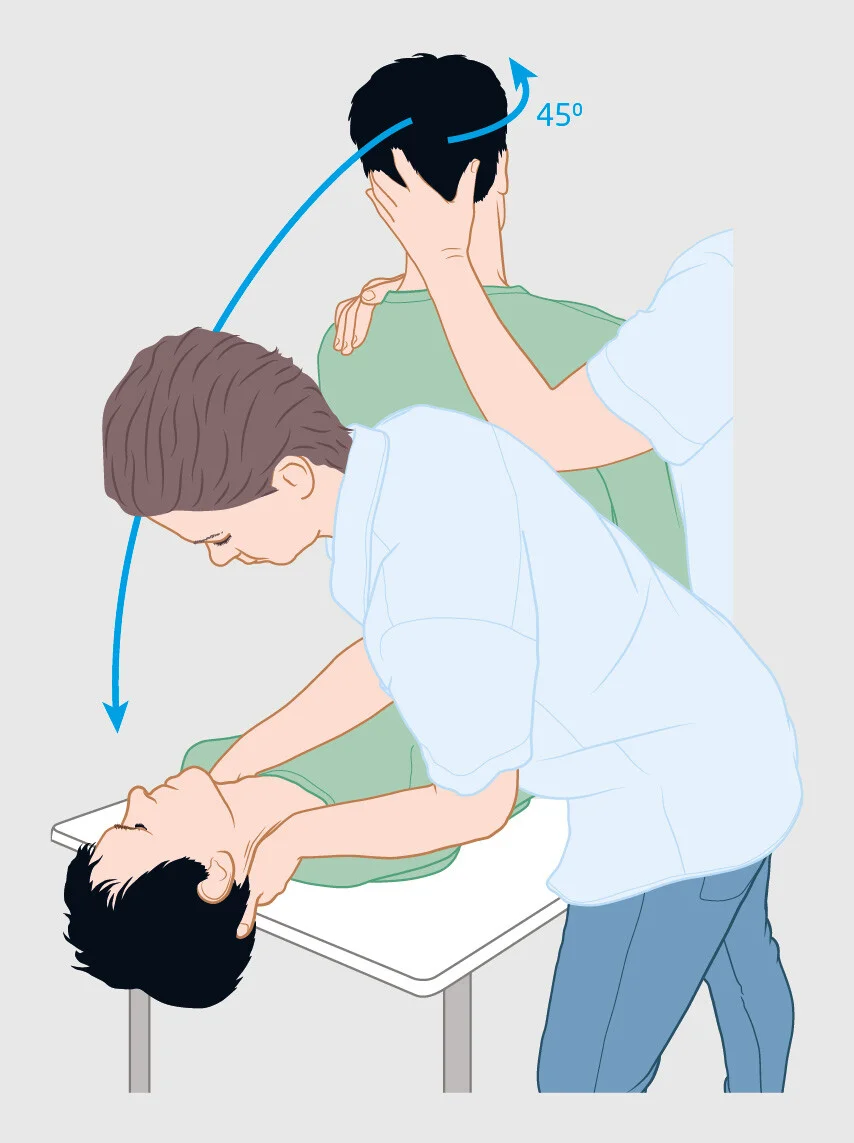
Since the beginning of this year, Bart has been working on his PhD research, focusing on BPPD (Benign Paroxysmal Positional Dizziness). This condition causes dizziness when the head is moved suddenly, lasting from seconds to minutes, and is the most common cause of vertigo.
His research includes several components:
- Optimization of repositioning maneuvers by comparing parameters such as speed and execution
- Patient experience, including symptom intensity, nausea, and anxiety
- The role of explanation and counseling during testing and treatment
- Long-term outcomes and mapping residual symptoms
- Objective measurements using VNG (videonystagmography) to make vestibular testing as sensitive as possible in primary care
His mission is to make vestibular science accessible and practically applicable for primary care physiotherapists.
Daily Practice: Complex Vestibular Disorders
Through close collaboration with ENT specialists and neurologists, Bart treats a wide spectrum of patients. These include individuals with BPPD (often combined with other conditions), unilateral vestibular loss, Ménière’s disease, vestibular migraine, and bilateral vestibulopathy.
Many patients present only after months or even years of symptoms. Therefore, every treatment starts with careful diagnostics followed by extensive counseling. Understanding the condition gives patients an immediate sense of control.
The core of treatment often consists of vestibular rehabilitation: balance exercises, gaze stabilization and VOR (Vestibulo-Ocular Reflex) training, rebuilding confidence, and helping patients establish a “new normal.”
The BalanceBelt: A Valuable Addition
For some patients, rehabilitation alone is not sufficient. In these cases, the BalanceBelt can provide support. This belt uses subtle vibrations to provide information about body posture, helping the brain compensate more effectively.
Bart sees particular benefits for patients with:
- Bilateral vestibular loss
- Complex balance problems
- Patients for whom rehabilitation shows insufficient effect after three months
He primarily observes improvements in patients’ sense of safety, fatigue levels, mobility, independence, and overall quality of life.
An Impressive Case
One young patient with bilateral vestibular loss functioned like a very frail elderly person due to severe balance problems. Despite intensive rehabilitation, daily functioning remained extremely limited.
With the BalanceBelt, the patient’s fatigue decreased significantly, and he regained the confidence to go outside independently. Although it did not change his work disability status, it did restore his ability to function in daily life—an enormous improvement in quality of life.
Challenges and the Future
The greatest ongoing challenges remain making the correct diagnosis, providing emotional support, and helping patients truly understand their condition. Motivation among this patient group is high, which makes the work especially rewarding.
Bart enjoys thinking about future developments, whether it involves new applications such as vibrations at different frequencies or concepts like “balance socks” that provide feedback through the soles of the feet or calf muscles. Innovation in the field of balance never stands still.
A Mission for Better Care
Bart’s work in clinical practice, education, and research comes together in one clear ambition: improving care for patients with dizziness and balance disorders and making this care accessible throughout primary healthcare.
Through his research, teaching, and continuous pursuit of improvement, he contributes to this mission every day.