


Dr. Josine Widdershoven – ENT specialist and expert in paediatric balance disorders
What sparked your interest in balance disorders?
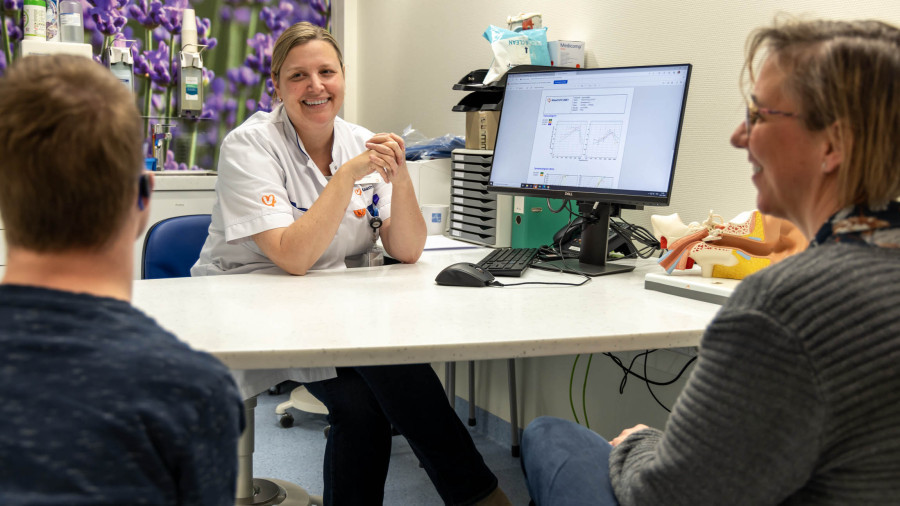
“My interest in balance disorders actually started during my ENT training in Maastricht. At that time, Professor Herman Kingma was already working there. In almost every patient discussion, he would ask: ‘How is this patient’s balance?’
I realised I knew relatively little about that topic, and that curiosity really drew me in. Together with Raymond van de Berg, who was training around the same time, I began to focus more deeply on vestibular disorders.”
“What fascinated me immediately is how incredibly important balance is as a sense, and how little people realise this until something goes wrong. Herman Kingma had a wonderful way of explaining complex concepts very clearly and vividly. He was truly an inspiring teacher.”
What makes the vestibular field so compelling to you?
“What I find most interesting is how much there is still to discover. We actually know surprisingly little, while balance problems have a very direct and profound impact on quality of life.
A balance disorder doesn’t just affect motor function; it influences social participation, cognitive functioning, emotional wellbeing, really many aspects of daily life. That complexity makes it a fascinating and important field.”
You work both in Maastricht and Antwerp. How did that develop?
“I spend most of my time in Maastricht, where I work with both adults and children with balance disorders. Over time, it became clear that balance problems in children were far more common than previously assumed, and I wanted to specialise further in that area.
That led me to Antwerp, a centre with extensive expertise in rare and complex paediatric conditions. There was no one in the region specifically focusing on the combination of balance disorders and children, so it became a very complementary second workplace.”
“In Antwerp, I currently see only children, while in Maastricht I treat both children and adults.”
You are also very active in research. What are your main research lines?
“I have two main research lines. The first focuses on how to reliably measure vestibular function in children of all ages, from infants to adolescents. Many existing balance tests are simply not child-friendly.”
“We adapt these tests to make them suitable for children, but then we must rigorously validate them to ensure they still provide reliable clinical information. After more than ten years of research, we now have age-specific protocols that guide us very precisely on which tests to use for which clinical question.”
“The second research line focuses on understanding why some children with poor vestibular function cope remarkably well, while others experience severe limitations. This is highly relevant, not only for rehabilitation, but also for deciding which children might benefit from additional interventions, such as the BalanceBelt or, in the future, a vestibular implant.”
You recently helped establish an international network. Can you tell us more?
“Yes, we recently founded the International Pediatric Balance Network. The Board consists of ten leading experts worldwide, in Europe, the US, Canada and Saudi Arabia, all specialising in balance disorders in children.”

“Our goal is to share knowledge, collaborate in research, and improve access to education. For countries with limited access to specialised training, we also organise freely accessible online lectures. Raising global awareness is an important part of our mission.”
Which conditions do you most commonly see in children?
“The most common diagnosis is vestibular migraine in children, just like in adults. Together with the Bárány Society, we helped define diagnostic criteria for this condition, because although it is very prevalent, we still know relatively little about it.”
“The second large group consists of children with hearing loss. About 50% of these children also have a balance disorder. For decades, clinical focus has been primarily on hearing, which is understandable and important, but if balance is affected as well, these children essentially have a double disability. Recognising that makes a huge difference in how well we can support them.”
What are the biggest challenges in diagnosis and treatment?
“Diagnosis remains the biggest challenge. Balance is still often overlooked, especially in children with hearing loss. Over the past 12 years, we have consistently advocated for routine balance assessment, and we are seeing progress, partly thanks to increasing awareness among parents and clinicians.”
“Treatment is usually physiotherapy, but it needs to be very targeted. Children can only tolerate limited therapy sessions, so it is crucial that therapists know exactly what the underlying problem is.”
“Equally important is counselling, for parents, schools, and caregivers. Children rehabilitate not only in therapy sessions, but also through play, sports, and daily activities.”
How does BalanceBelt fit into your clinical practice?
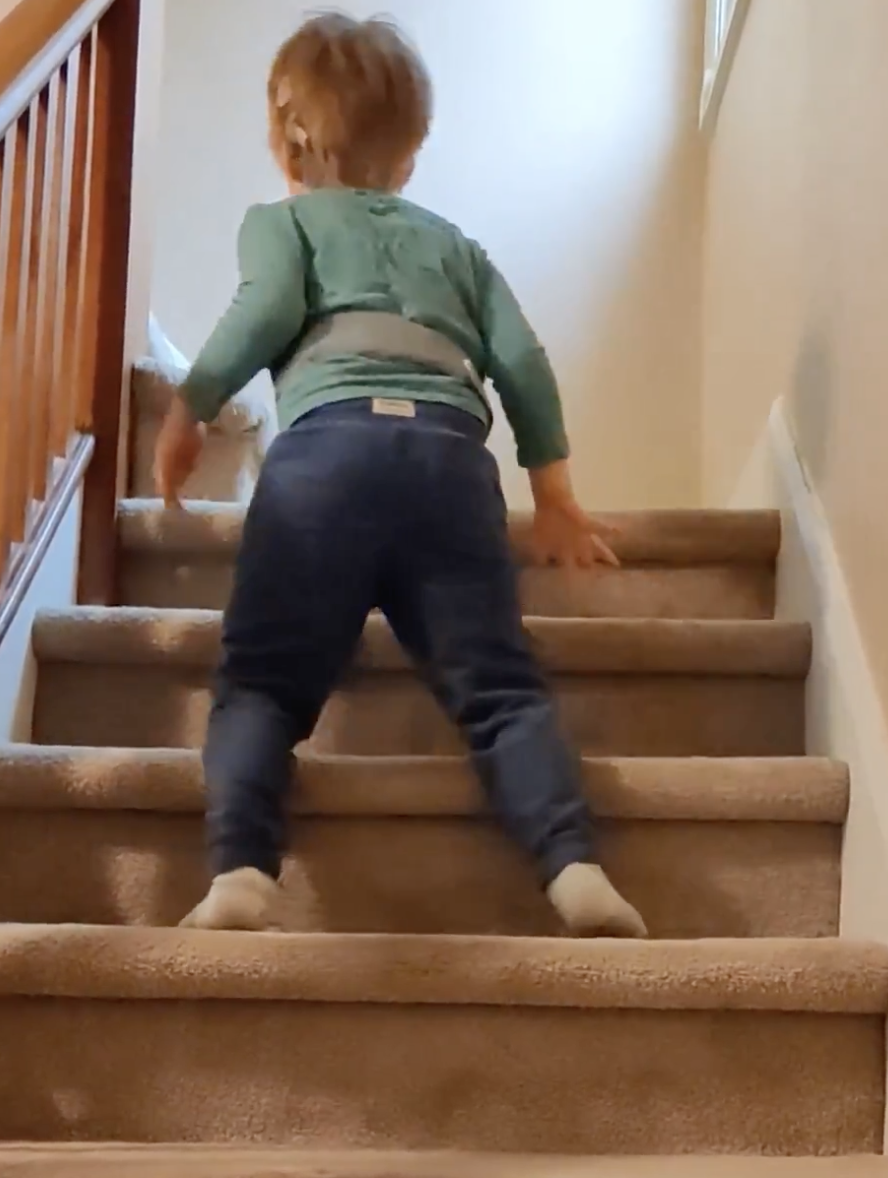
“I have been using the BalanceBelt with children for about four years now. I mainly introduce it when physiotherapy alone is insufficient or becomes frustrating.”
“Children with bilateral vestibular loss, especially when combined with hearing loss, tend to benefit the most. BalanceBelt is very low-threshold to try, and children generally tolerate it extremely well. It works best when used in collaboration with a physiotherapist, for example during balance exercises.”
Can you share an example that illustrates its impact?
“One memorable case was a teenage girl with progressive bilateral vestibular loss who played football at a very high level. Despite extensive physiotherapy, she struggled with turning and orientation during play. Using the BalanceBelt gave her just that extra support, both physically and in terms of confidence. She also used it while skiing.”
“Interestingly, after about a year she no longer needed it, she felt she had ‘learned’ enough. That is something I often see in children: the BalanceBelt helps them cross a developmental threshold rather than being a permanent aid.”
“Another case was a toddler who had been given a walker at age two due to severe balance loss. With the BalanceBelt, she was able to walk independently within months and became an active, running child. Later, she started wearing it again at school, where it helped reduce fatigue and improve focus.”
What would you like other clinicians to know about BalanceBelt?
“For adults, the BalanceBelt needs to be used continuously. In children, however, it frequently acts as a temporary support to help them achieve key motor milestones. That makes a huge difference for their development, participation, and self-confidence.”
And finally: how could BalanceBelt be improved for children?
“Functionally, the current design already works very well and is comfortable. If anything, making it more playful, with colours or themed covers, could help children embrace it even more. Something like a ‘superhero belt’ can make wearing a medical device feel empowering rather than clinical.”
Link to International Pediatric Balance Network: https://www.ipbn.net/about-us